Εμφάνιση αναρτήσεων με ετικέτα Δελφίνια. Εμφάνιση όλων των αναρτήσεων

Σάββατο 22 Μαρτίου 2025

Η Γαλλία παρεμβαίνει για να υποστηρίξει το πρωτοποριακό καταφύγιο δελφινιών της Ελλάδας


Σε άρθρο  που δημοσιεύτηκε την περασμένη Δευτέρα (17/03/2025) στο Greek Reporter, με τίτλο "France Steps in to Boost Greece’s Innovative Dolphin Sanctuary", γίνεται λόγος για τις εξελίξεις που αφορούν στο υπό δημιουργία Καταφύγιο Θαλάσσιας Ζωής Αιγαίου από το Ινστιτούτο Θαλάσσιας Προστασίας "Αρχιπέλαγος, καθώς και στο ενδιαφέρον από το Υπουργείο Περιβάλλοντος της Γαλλίας και ειδικούς επιστήμονες του εξωτερικού για το θέμα αυτό. Ιδιαίτερη αναφορά γίνεται στην πολυετή κωλυσιεργία και στοχευμένη γραφειοκρατική παρεμπόδιση [βλ.ΤΑ ΝΕΑ, 21/03/25]* της αδειοδότησης αυτού του  έργου, που κρίνεται αναγκαίο και υλοποιείται στο κέντρο του Αιγαίου χωρίς δημόσιους πόρους.

Η Γαλλίδα υπουργός Οικολογικής Μετάβασης, Agnes Pannier-Runacher, υποστηρίζει δημοσίως την ιδέα των καταφυγίων για πρώην αιχμάλωτα δελφίνια, έχει δηλώσει μάλιστα πως σκοπεύει να έρθει σε συνεννόηση με τους ομολόγους της στην Ελλάδα, την Ιταλία και την Ισπανία, με σκοπό την δημιουργία ενός καταφυγίου από κοινού. 

Καθώς η αιχμαλωσία των κητωδών έχει απαγορευτεί και στην Γαλλία, η Γαλλίδα υπουργός θεωρεί ότι η μοίρα των κητωδών (2 όρκες και 12 δελφίνια) που έχουν απομείνει στο Marineland είναι προσωπική της υπόθεση. Σκοπεύει μάλιστα να συνεργαστεί και με την Ελληνική Κυβέρνηση, ούτως ώστε να αρθούν τα εμπόδια που καθυστερούν την αδειοδότηση και λειτουργία του Aegean Marine Life Sanctuary. Τώρα που η βιομηχανία της αιχμαλωσίας των κητωδών (τουλάχιστον στην Ευρώπη) πνέει πλέον τα λοίσθια, θα ήταν πολύ σπουδαίο για την Ελλάδα να γίνει η πρώτη χώρα στον κόσμο που θα προσφέρει στα δελφίνια μια συμπονετική διέξοδο. Το περασμένο Σαββατοκύριακο, το Υπουργείο της έστειλε στο νησί των Λειψών μια εμπειρογνώμονα, συνοδευόμενη από ειδικούς επιστήμονες και δημοσιογράφουςγια να δουν επί τόπου την πρόοδο και να εξετάσουν τα εμπόδια που δεν επιτρέπουν στα καταφύγια (στην Ελλάδα και την Ευρώπη) να γίνουν πραγματικότητα. 

 Η πρόεδρος της οργάνωσης Sea Shepherd France, Lamya Essemlali, που συνεργάζεται με την Γαλλίδα υπουργό, λέει ότι η δημιουργία του πρώτου καταφυγίου θα σημάνει την αρχή μιας νέας εποχής στη σχέση μας με τα δελφίνια, καθώς επίσης και την αρχή του τέλους μιας παγκόσμιας βιομηχανίας που πολύ θα ήθελε να εκμεταλλευτεί και την τελευταία ρανίδα της αιχμαλωσίας τους. Η επιτυχία αυτού του εγχειρήματος θα καταρρίψει έναν από τους κυριότερους ισχυρισμούς των εκμεταλλευτών τους, που υποστηρίζουν ότι, για τα ζώα αυτά, δεν υπάρχει άλλη λύση πλην της μεταφοράς από δεξαμενή σε δεξαμενή μέχρι το τέλος της ζωής τους. Γι' αυτό και η παρεμπόδιση της δημιουργίας τέτοιου είδους καταφυγίων είναι ζήτημα ζωής και θανάτου για τα δελφινάρια και τους συνεργάτες τους. 

Δείτε ολόκληρο το άρθρο μεταφρασμένο στα ελληνικά εδώ: facebook/Archipelago.gr/posts και στην ιστοσελίδα του Αρχιπελάγους, εδώ: https://archipelago.gr/i-gallia-paremvainei-gia-na-enischysei-to-protoporiako-katafygio-ton-delfinion-tis-elladas/ 

Ακολουθεί η αναδημοσίευση του άρθρου από το Greek Reporter:


In ancient Greece, the cradle of Western civilization, dolphins were revered as demi-gods. Roaming the seas and oceans undisturbed by humans, dolphins have been depicted throughout ancient Greek culture and mythology as divine creatures, and the act of killing one, according to many historical sources, was punishable by death. Today, over 2.500 dolphins are held in captivity across the globe, including in Greece, feeding a multi-billion dollar industry, where these highly-intelligent animals are used for commercial purposes in man-made marine parks. But stricter government laws on the protection of cetaceans in Europe and the dramatic decline of visitors to parks hosting dolphin and orca shows has been forcing many to shut down their operations, leaving their animals’ futures up in the air. 


Two facilities, one in France and one in Greece, have announced that they will be both emptying their tanks this spring. With no option other than rehoming their animals to another tank somewhere in the world and amid a public outcry, France, saying that the well-being of its captive animals is a priority, has been stepping up efforts to look into the alternative of transferring them to a sanctuary. One option might be Greece’s almost complete dolphin sanctuary in the Aegean Sea, whose operational permits have remained in limbo for years because of the Greek government’s inexpediency and bureaucratic delays.


The French government is engaged in a race against time to find the best relocation solution for Marineland’s 12 dolphins and two orcas, Wikie and her son Keijo, since Marineland, Europe’s largest marine zoo, shut down in January 2025 due to a forthcoming 2021 law banning shows featuring cetaceans and their use for breeding after 2026. In a statement issued in December 2024, the park said it was shutting its doors because 90 percent of the visitors to the park came to watch the orca and dolphin shows. The fate of the two orcas, France’s last two performing killer whales, has been of particular concern. As of now, they are expected to go to Loro Parque, a controversial marine zoo in Spain, while animal rights campaigners want them housed in a sanctuary. 


The idea of sanctuaries for formerly captive marine mammals has been gaining momentum in recent years worldwide. Agnes Pannier-Runacher, Minister at France’s Ministry for Ecological Transition, has publicly supported the creation of sanctuaries and in February, according to the BBC, said she would speak to colleagues in Greece, Italy and Spain about creating a sanctuary together. 

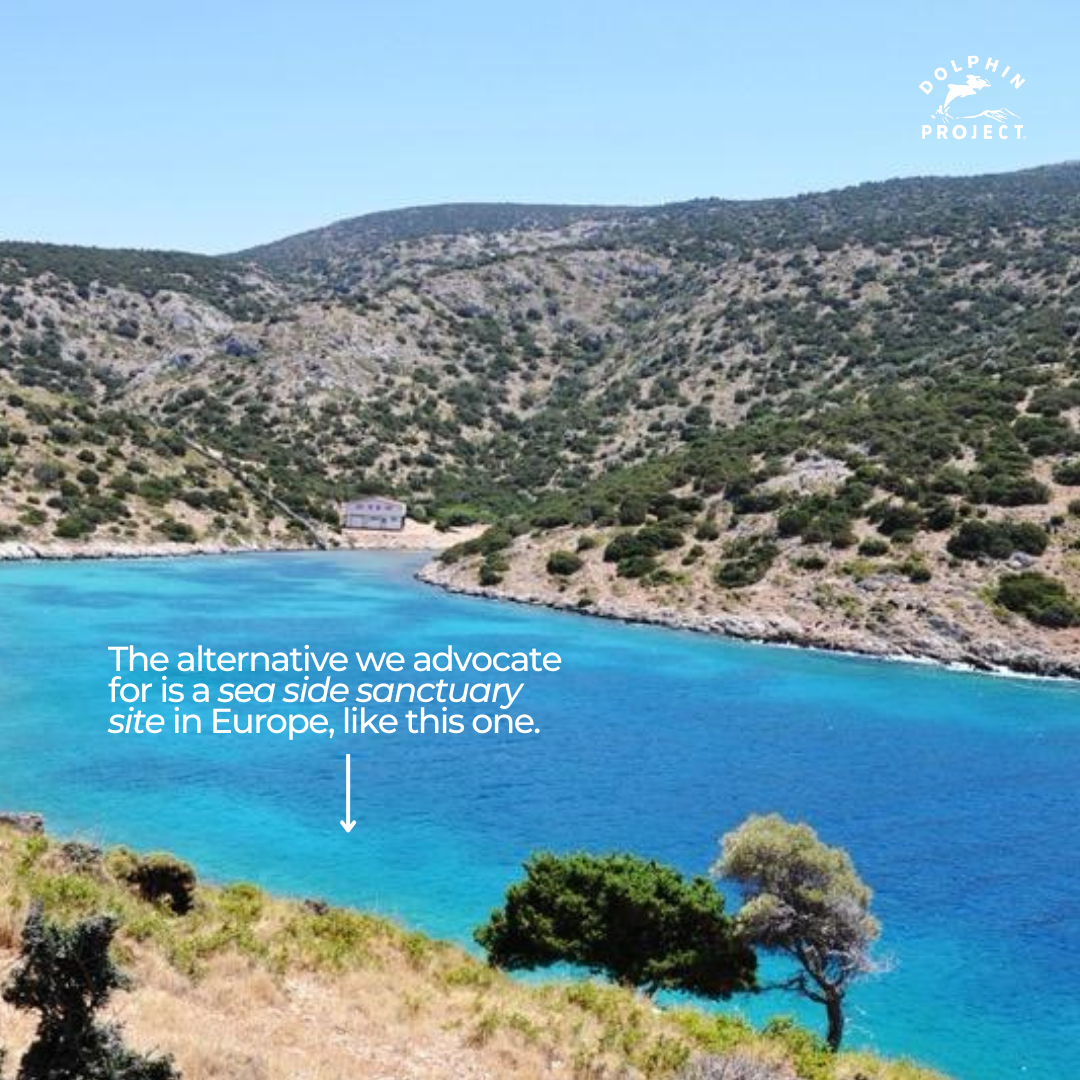
Last weekend, France’s Ministry of Ecological Transition sent an expert to Greece and the island of Lipsi, where the sanctuary, founded by Archipelagos Institute of Marine Conservation, is located in a remote and peaceful bay away from any human interference. The aim was to witness the progress on site and understand the obstacles that prevent sanctuaries in Greece (and Europe) from becoming a reality. The French ministry says it “wishes to use its full weight to bring the projects currently under development to fruition.”

Greek Reporter was at the sanctuary during the French government representative’s visit, along with an international team of experts on marine mammals and their rehabilitation, who discussed in depth the sanctuary project with the French expert.

Lamya Essemlali, President and co-founder of Sea Shepherd France, one of the largest non-profit marine conservation organizations, was also present to assess the project and has been working closely with the French minister on the issue. Essemlali tells Greek Reporter that the ministry’s expert sent to Lipsi will make a report on the sanctuary upon her return to France. The fate of Marineland’s captive dolphins has become a “personal issue” for the French minister, who “wants to be the minister who wants to offer a better life for those animals. The minister wants to coordinate with the Greek government to work together in order to lift the obstacles to this project and I think it would be absolutely amazing for Greece to be the first country in the world that offers to dolphins a way out from the captivity industry, because we know that this industry is dying now and sanctuaries are going to be of essence,” Essemlali says.

The group also visited the institute’s research headquarters on the island of Samos and discussed the sanctuary project along with marine conservation on the deck of the institute’s sailboat “Triton,” with wild dolphins swimming by from time to time as the boat sailed softly through the Aegean’s blue waters. On a research trip aboard “Triton,” those on board were able to witness wild dolphins freely swimming in the Aegean Sea, as nature intended them to. 


Aboard “Triton” Dr. Jan Schmidt-Burbach, a German veterinarian from World Animal Protection Denmark, who also leads the scientific expert advisory board of the Archipelagos sanctuary, explains to Greek Reporter that dolphins are animals with high intelligence, with a very complex social structure and communication system that allows them to hunt for their prey. They can make dives hundreds of meters deep and reportedly reach swimming speeds of up to 64 kilometers per hour. All these abilities, which have been gifted to them by nature in order to thrive in the complex of ocean environment, are muted in captivity. In fact, dolphins born in captivity might struggle to survive in the wild, unless they are carefully prepared to live in that environment again. While most captive dolphins will not be able to live as nature intended them, with proper and gradual long-term preparation before and after their move to a sanctuary, they can still thrive in a natural environment. What makes the Lipsi sanctuary so fit for such an endeavor he says, is that while it is part of the sea, by being a cove, among other things, it will allow the dolphins to be in a natural setting while at the same time provide them with the safety of an “enclosure” such as they have been used to for years.


Thodoris Tsimpidis, Founder and Head of Conservation Actions of Archipelagos, who was also aboard “Triton,” says the French government’s visit is of critical importance. On a political level, France leads the way internationally for a real solution on the problem of captive dolphins and the abuse of marine mammals for commercial exploitation and we believe that this initiative will give a pan-European push to solve this problem, for which pressure from the public intensifies.” CMA is offering visitors a number of “dolphin experiences” that can cost as much $549/person. Dolphins are animals with high intelligence, with a very complex social structure and communication system. In the wild, they can make dives hundreds of meters deep and reportedly reach swimming speeds of up to 64 kilometers per hour. 


At the same time, more marine parks are scheduled to close. In Belgium, the Flemish government ruled in November 2024 that the dolphinarium at Boudewinj Seapark in Bruges must close by 2037. The decision has been framed as a step toward improving animal welfare but the park’s management argues that it breaches prior agreements. When a dolphinarium closes in a country, there is no other option than [for the dolphins] to be sent to another dolphinarium. And that’s how they perpetuate the industry,” Essemlali says, adding that the creation of the first dolphin sanctuary would be the beginning of a new era for the dolphins and also the beginning of the end for the captivity industryThe captivity industry is dying in Europe anyway and I think we shouldn’t underestimate the importance of the first sanctuary when it happens because it will shut down one of the captivity industry’s main arguments, which is to say ‘there’s no way out for those dolphins.’ For the captivity industry, this is almost a matter of survival. That no sanctuary ever opens.”


In contrast with France’s interest in the pressing need for the operation of the Archipelagos sanctuary, which has been almost complete for some time, Greece’s Ministry of the Environment and Energy, responsible for issuing the relevant permits, has been failing to do so for seven years. The issue of the sanctuary’s operation came to the spotlight again, after Attica Park, Greece’s main zoo near Athens, announced on January 22 that it would send five of its captive dolphins to a Florida aquarium in the United States by May 2025. Animal activists in Greece and all over the world have been calling for the animals to be transferred to the Lipsi sanctuary, instead of spending the rest of their lives in another concrete tank. According to Archipelagos, the institute has been applying for a permit to operate the marine mammal care center, which is a prerequisite in order to get the dolphin sanctuary permit, since 2018. Documents seen by Greek Reporter, reveal that the institute got the first, written response from the ministry six years later and almost five months after the fifth request.

While Greece is notorious for its unrelenting bureaucracy, Tsimpidis says that in the case of the sanctuary, the problem goes far beyond that. He insists that the delay comes from two ”specific, lower-level ministry employees,” who are members of the ministry’s committee for the relevant licensing and who he alleges are “part of a system that opposes the establishment of the sanctuary.” He further says that none of the committee members have ever visited the sanctuary in Lipsi nor have they requested any information on the project. Moreover, one of them, who is also a partner at Attica Park, has already cleared the park’s dolphins for the long air trip to Florida. (The names of the ministry employees, along with the allegations against them have been disclosed to Greek Reporter by Archipelagos through an official letter of protest the institute sent to the Greek Ministry of the Environment and Energy in early March 2025). The dolphin sanctuary on the island of Lipsi is the first of its kind worldwide. 


In a question by Greek Reporter to Greece’s Ministry of the Environment and Energy in late January 2025 regarding the delays for the dolphin sanctuary and the allegations against some of its employees, the ministry said in a statement that the relevant authorities are looking into the case and that a decision will be made soon. However, Archipelagos says nothing has changed since and they have yet to be contacted by the ministry.

Meanwhile, on February 13, 2025, a number of MPs from Greece’s PASOK socialist party (Manolis Christodoulakis, Manolis Chnaris and Giorgos Nikitiadis) put a question in Greece’s parliament and, addressing Theodoros Skylakakis, then Minister of the Environment and Energy, questioned him on the ministry’s “inexplicable” delay in granting the permit to the Lipsi sanctuary. They also questioned the dolphins’ transfer to the Florida aquarium, which, “according to American media reports, has a high mortality rate among its resident dolphins.” The hope for Archipelagos now is that with a new minister at the helm after last week’s cabinet reshuffle, the case of the sanctuary will be reviewed by authorities with a renewed sense of urgency.


The transfer of Greece’s captive dolphins to an aquarium across the Atlantic Ocean fueled  a controversy along with an outcryThe Clearwater Marine Aquarium has applied for a federal permit to import the dolphins from Greece under File No. 28233 to be used “for public display.” The application was submitted in December 2024 to the National Oceanic and Atmospheric Administration Fisheries, an American scientific and regulatory federal agency, and was open to public comment until February 3, 2025. However, due to a high volume of comments from all over the world, including Greece and the United States objecting to the transfer, the deadline was recently extended until March 20, 2025. As of March 17, NOAA Fisheries had received 1,679 comments. As seen in Clearwater’s application file photos, the aquarium’s dolphin complex is a massive concrete enclosure where dolphins are kept indoors. 


In a letter dated February 14, 2024 (which is included in Clearwater’s public application for the import of Greece’s dolphins) sent by Attica Park’s director and CEO Jean Jaques Lesueur to Clearwater Marine Aquarium, he mentions that Robert Gojceta (the park’s marine mammal curator, according to the park’s website) held talks at Clearwater during his visit to Florida. “From what Robert described to us you have outstanding facilities and this makes this move a very positive outcome,” the letter reads towards the end.

Two years ago, according to animal activists and reports in local media, four of nine bottlenose dolphins died at the Clearwater Marine Aquarium, which originally was the water treatment plant for the city, within 16 months. The four dolphin deaths followed the 2021 completion of the $80 million Ruth J. & O. Stone Dolphin Complex, tripling the aquarium dolphin habitat, which can now hold up to 20 dolphins. There are currently five dolphins at the facility.

Moreover, in September 2024, Florida, which is an area prone to extreme weather and hurricanes, was hammered by Hurricane Helene, which caused extensive destruction to the Clearwater Marine Aquarium facilities, reaching millions of dollars. According to local media, animals had to be temporarily moved, vital equipment was damaged and in January 2025, administrators began dramatic cost-saving measures, including cutting salaries and the “temporary furloughs” of several of its 175 employees. While currently not at 100 percent and with attendance already down even before the hurricane, according to several local media reports, Clearwater Aquarium says it hopes to make a comeback in 2025.


Greek Reporter reached out to Attica Park’s CEO via email to ask whether it still considers the Clearwater facilities “outstanding.” Jean Jaques Lesueur responded that “The weather damaged occurred in early October last year, and Clearwater reopened to the public in November after a $1.5 million damage refit and that there are no staff on furlough today.” Asked whether Attica Park has a plan B in place, should the US government does not grant Clearwater the import permit, Lesueur said: “We are confident that the permit will be granted.


The Clearwater Marine Aquarium has applied for a federal permit to import the dolphins from Greece under File No. 28233 to be used “for public display.” 
Clearwater Marine Aquarium isn’t a dolphin sanctuary other than in name,” Ric O’ Barry, Founder of the Dolphin Project, told Animals 24-7 via email in January. “It’s a huge concrete building with concrete and glass holding tanks inside the belly of the facility,” dominated by a souvenir store and a restaurant.

The chief zoological officer for the Florida aquarium, James Powell told Josh Rojas of the local ABC news affiliate that “We need additional animals there with our current animals to pθrovide the social makeup that you would typically see in a wild population. So that’s kind of driving this.” Dr. Powell explained that the aquarium would not be “buying” the Attica Zoo dolphins but would be paying for their relocation expenses. We’re trying to do the right thing here in terms of providing these animals a forever home,” insisted Dr. Powell. “This potentially is a very positive situation. We want to provide the best care that we can. We’re a science-based research conservation base.” O’ Barry, along with many other animal activists and organizations worldwide, dismisses those claims, suggesting “a much more humane alternative would be to take the dolphins directly to the Greek island of Lipsi,” a maximum distance of under 200 miles, “where they can live out the rest of their lives in peace and dignity.” 


Πηγήhttps://greekreporter.com/2025/03/17/france-boost-greece-innovative-dolphin-sanctuary/


Καταχωρήθηκε


*Στις μέρες μας, πολλοί ζωολογικοί κήποι ανά την Ευρώπη αναστέλλουν τη λειτουργία των δελφιναρίων, είτε λόγω χαμηλής επισκεψιμότητας, είτε λόγω νομικών μέτρων που πρόσφατα έλαβαν κυβερνήσεις, όπως αυτές της Γαλλίας και του Βελγίου. Καθώς περιβαλλοντικοί και φιλοζωικοί φορείς ανά τον κόσμο, αλλά και μεγάλο μέρος των πολιτών θεωρούν πλέον αδιανόητο να εγκλωβίζονται τα δελφίνια σε τσιμεντένιες δεξαμενές, περίπου 3.000 δελφίνια φυλακισμένα σε δεξαμενές, σε διάφορες χώρες του κόσμου (στην Ευρώπη είναι περίπου 300) ψάχνουν "σπίτι". 

Το Κέντρο Περίθαλψης Θαλάσσιας Ζωής έχει, από την πρώτη μέρα, την στήριξη του δήμου και της τοπικής κοινωνίας του νησιού. Το Ινστιτούτο Αρχιπέλαγος έχει ανακατασκευάσει και εξοπλίσει ένα πρώην εγκαταλελειμμένο κτίριο του Δήμου Λειψών, ενώ η έκταση 7 στρεμμάτων γύρω από αυτό έχει παραχωρηθεί από το ΥΠΕΝ για τον συγκεκριμένο σκοπό. Πρόκειται για ένα πρότυπο πράσινο κτίριο 800 μ² που ήδη λειτουργεί με πλήρη ενεργειακή αυτονομία (ΑΠΕ), καθώς και με αυτονομία υδροδότησης (πρότυπο σύστημα αφαλάτωσης μικρής κλίμακας με χαμηλή ενεργειακή κατανάλωση), σύστημα θέρμανσης με βιομάζα, και σύστημα διαχείρισης και επεξεργασίας νερού. Έχει αναγνωριστεί από πολυάριθμους φορείς του εξωτερικού ως πρότυπο αειφόρου λειτουργίας. Ο σχεδιασμός έχει γίνει από την Αρχιτεκτονική Σχολή του Πανεπιστημίου Τορόντο του Καναδά, ενώ, κατά τη διαδικασία κατασκευής του, το έχουν επισκεφτεί επιφανείς προσωπικότητες από την Ελλάδα και το εξωτερικό.

Την περασμένη Κυριακή (16 Μαρτίου), ολοκληρώθηκε επιτόπια συνάντηση στο νησί των Λειψών, από εμπειρογνώμονα που απέστειλε η Γαλλίδα υπουργός Περιβάλλοντος Agnès Pannier-Runacher, συνοδευόμενη από ειδικούς επιστήμονες και δημοσιογράφους. Η συγκεκριμένη επίσκεψη είναι ενδεικτική του ενδιαφέροντος της γαλλικής κυβέρνησης, να δώσει ένα οριστικό τέλος στα δελφινάρια και να πρωτοστατήσει διεθνώς στη μετάβαση σε μία νέα εποχή με πραγματικό σεβασμό στην ευζωία των ζώων. 

facebook.com/Archipelago.gr/posts/ -- https://kirkinews.gr/articles/ermaio-tis-grafeiokratias-to-thalassio-katafygio-stous-leipsous/ -- https://www.tanea.gr/editor/ntinos-siotis/

Σάββατο 8 Φεβρουαρίου 2025

Από τα Σπάτα στην Φλόριντα: Το παρασκήνιο της μεταφοράς και η μοίρα των αιχμάλωτων δελφινιών (μέρος 2ο)


Εδώ και χρόνια, τα ευρωπαϊκά δελφινάρια αναπαράγουν αιχμάλωτα δελφίνια με πρόσχημα την επιμόρφωση του κοινού και την διατήρηση των ειδών. Τώρα όμως που πολλές επιχειρήσεις κλείνουν, στις χώρες της Ευρωπαϊκής Ένωσης δημιουργείται ένα πλεόνασμα δελφινιών που πλέον δεν αποφέρουν κέρδος, μια πρόκληση για την λήψη αποφάσεων που θα συμφωνούν με τις σύγχρονες απόψεις για την ευζωία των ζώων, και ένα δίλημμα: τι είναι προτιμότερο, τσιμεντένιες αποθήκες ψυχών ή καταφύγια στην θάλασσα; Ποιοι αντιδρούν στην δημιουργία καταφυγίων ελεγχόμενης απελευθέρωσης των πρώην αιχμαλώτων και μη απελευθερώσιμων δελφινιών και γιατί;


Άρθρο της Hellen O'Barry στην ιστοσελίδα της οργάνωσης Dolphin Project, στις 6/02/25, με τίτλο "A warehouse or the ocean?" at https://www.dolphinproject.com/blog/a-warehouse-or-the-ocean/ [FbXStop Attica Zoological Park Dolphinariun (Athens - Greece)]


Δείτε επίσης Από τα Σπάτα στην Φλόριντα: Το παρασκήνιο της μεταφοράς και η μοίρα των αιχμάλωτων δελφινιών (μέρος 1ο)


Dolphinariums in Europe have been breeding dolphins for decades under the pretext of "conservation and education". The European Union now has a serious animal welfare predicament: more dolphins than dolphinariums have room for. As a result of excessive captive breeding, dolphinariums in the European Union now have more dolphins than they can fit into their stadiums, even by their standards. While not all captive dolphins can be returned to their natural homes, all captive dolphins can be introduced to natural sea lagoons. This would provide them with the natural rhythms and sounds of the sea, the tides, the currents and the thrill of chasing live fish. So far, the dolphinarium industry has not been willing to help us create real ocean sanctuaries for dolphins. Instead, they want to keep the dolphins locked up in tanks forever. Captive dolphins around the world are warehoused in barren boxes that offer about as much stimuli as one would find in an underground parking lot. Public display facilities tell visitors that dolphins thrive in tanks, and there is no need to create more spacious and natural habitats for them. 


Dolphinariums in Europe have been breeding dolphins for decades under the pretext of "conservation and education". The European Union now has a serious animal welfare predicament: more dolphins than dolphinariums have room for, even by their standards. This probably explains why the Attica Zoo near Athens, Greece, is seeking to send five of its dolphins to Clearwater Marine Aquarium (CMA) in the United States: Apparently, no facility in Europe has room to take them. Three of these dolphins are common bottlenose dolphins, and two are Black Sea dolphins. The bottlenose dolphins, named Blau, Nuik, and Tumay, were born at Spain’s Barcelona Zoo, which closed, and sent to Attica Zoo in 2020. The Black Sea dolphins, named Nima and Nojus, were born at the Lithuanian Sea Museum and arrived at Attica Zoo in 2010.


CMA’s permit application* discloses the issue of the EU’s overfilled dolphinariums. It explains that Attica Zoo is removing its dolphin collection permanently because the zoo wants to "refocus its resources, conservation and educational work on different species". The document** also specifies this will be a single import of five compatible male dolphins "to provide accommodation and care to optimize the welfare of marine mammals that are overpopulated in the European Union due to successful breeding and decreased availability of facilities". According to the document, they have "a surplus of marine mammals" because of "successful breeding", and some zoological institutions will not repair or replace their aging facilitiesThe document underscores that the population of captive dolphins in Europe has been self-sustaining for several years but now faces "an increasing challenge" in rehoming more than 60 animals. In addition to the aging facilities, the high costs of replacing them and even operating them as well as new legislation are driving the changes. Also, some facilities are planning "to phase out the species altogether".

So there it is. In their self-serving quest to secure a constant source of dolphins for public display, EU dolphinariums have produced far more dolphins than they can fit into existing stadiums. Now they are looking for alternate ways to warehouse them. Clearly, the dolphinarium industry, both in Europe and abroad, doesn’t want to see the establishment of ocean sanctuaries for captive dolphins. They seem determined to make sure the dolphins remain within the same archaic structure of their own industry. Spacious and more natural environments, where non-releasable dolphins can benefit from the sights and sounds of nature without being paraded on a stage, would make the industry’s dreary concrete theaters look unquestionably cruel in comparison. I suspect this is why every time a dolphinarium closes, the dolphins are shipped to another similar facility without any talk about the pressing need to create better lives for them closer to nature.


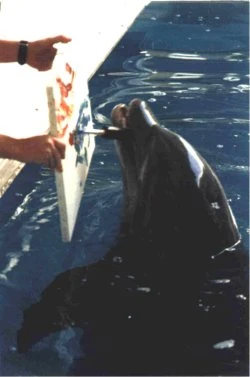
CMA is described online as a marine animal rescue facility that currently houses three formerly wild bottlenose dolphins and two rough-toothed dolphins. On its website, CMA features a paint with a dolphin program. Visitors pay a hefty fee to hold up a piece of canvas so a trained dolphin can paint on it by holding a paintbrush in its mouth. According to CMA, this constitutes completely natural dolphin behavior and supports the dolphins’ mental and physical well-being. The facility’s other pricey dolphin interaction programs are dubbed "VIP Dolphin Experience"*** and "Dolphin Photo Moment". CMA’s booking page promotes them as "Connect with a dolphin! Go poolside next to the rescued dolphins while our professional photographers capture the moment as the dolphin interacts with you"!


Taking advantage of wild dolphins’ need for help by putting them to work in programs aimed at amusing visiting tourists raises serious ethical questions. It certainly does not make CMA look like a dolphin rescue center that treats dolphins with dignity and respect! And now CMA wants to import five captive-born dolphins from Greece. 

Unlike the dolphins already there, the Attica Zoo five (Blau, Nuik, Tumay, Nima, and Nojus) were not stranded or found in some other kind of trouble in nature. They were bred in captivity only to be put on display in a stadium. It remains to be seen if CMA is going to use them as photo ops for fun-seeking tourists. But either way, after a nearly 30-hour journey by land and air, they will find themselves confined once again inside a barren concrete detention space with nothing natural to explore and nowhere to swim to. They just have gone from one bad situation to another.


For years, captive dolphin theaters in Europe have completely ignored the enormous ethical complications of breeding one of the oceans' most powerful predators in tanks where they can’t put their natural abilities, including their highly sophisticated sonar, to any real use. I suspect they have assumed that paying audiences would ignore them, too. They did not take into account that legislators and the public in some countries would eventually catch on to the scheme and become increasingly sensitized to the dolphins’ plight. It’s about time the staff of these facilities took responsibility for the problems they have created through excessive breeding. They should be focusing their efforts on establishing real sanctuaries where non-releasable dolphins still receive care from humans while enjoying the ability to use their power and strength to swim normally, dive, and explore using their sonar, and never again have to perform abnormal stunts for food rewards of dead fish.


The closure of Attica Zoo’s dolphin stadium is a win for dolphin freedom advocates. There will be no more captive dolphins in Greece, probably forever. Every time a dolphinarium closes, it pressures others to do the same. We hope the EU will eventually become dolphinaria free. Attica Zoo’s decision to close its dolphin exhibit is the right one, but the decision to send five dolphins to another dreary tank on the other side of the Atlantic Ocean is not. For them, this is not a win

According to the website CetaBase, which tracks captive dolphins worldwide, Attica Zoo has nine dolphins in all. Only five are mentioned in CMA’s permit applicationBlau, Nuik, Tumay, Nima, and Nojus. 

The others are named Leevi, Eevertti, Ekinox, and Naska. Leevi and Eevertti are the offspring of wild-caught dolphins from Florida, USA. They were born at Särkänniemi Adventure Park in Finland and sent to Attica Zoo in 2016 after the Finnish dolphinarium announced its closure. Ekinox and Naska were born at the now closed Parc Asterix in France and sent to Attica Zoo in 2016. 

I have not seen any news outlets mention them in connection with the permanent closure of Attica Zoo’s dolphin exhibit, and that makes me wonder, What is Attica Zoo planning to do with them?


Photo1 at https://www.dolphinproject.com/blog/a-warehouse-or-the-ocean/ 

Photo2 at https://www.cmaquarium.org/experiences/paint-with-a-dolphin/ 


*https://www.fisheries.noaa.gov/action/permit-application-import-5-bottlenose-dolphins-file-no-28233-clearwater-marine-aquarium

**https://www.fisheries.noaa.gov/s3/2024-12/28233-CMA-application-final.pdf

***


https://tinyurl.com/ymp2mwk5


Καταχωρήθηκε


Τρίτη 4 Φεβρουαρίου 2025

Από τα Σπάτα στην Φλόριντα: Το παρασκήνιο της μεταφοράς και η μοίρα των αιχμάλωτων δελφινιών (μέρος 1ο)


[Update: το 2ο μέρος εδώ: https://gatouiti-blog.blogspot.com/2025/02/2.html]

Δείτε επίσης: Από τα Σπάτα στην Φλόριντα: Γιατί αντιδρούν οι φιλοζωικές οργανώσεις στην μεταφορά των δελφινιών 


Σύμφωνα με δημοσιεύματα του Αμερικανικού Τύπου, όπως αυτά συνοψίζονται στο Animal 24-7 στις 26/01/25, το Clearwater Marine Aquarium ("γνωστό για την προοδευτική προσέγγιση του στην ευημερία των ζώων", όπως αναφέρει, σε σχετική ανακοίνωσή του, το Αττικό Πάρκο), που παρουσιάζεται ως Μη Κυβερνητική Οργάνωση με επιστημονικές και περιβαλλοντικές δραστηριότητες, πιστοποιημένη από την "Alliance of Marine Mammal Parks and Aquariums" και είναι μέλος της Ένωσης Τουριστικών "Ατραξιόν" της Φλόριντα, πρόκειται να ζητήσει από τον πρόεδρο των ΗΠΑ, Donald Trump και τον κυβερνήτη της Φλόριντα, Ron DeSantis, να υποστηρίξουν την έγκριση την εισαγωγής πέντε δελφινιών από την Ελλάδα, προσπαθώντας να επιβιώσει οικονομικά. Αυτά τα δελφίνια θα αναπληρώσουν την μείωση του πληθυσμού του Ενυδρείου, από εννέα που ήταν το 2021, σε μόλις πέντε που είναι (μετά από 4 θανάτους) τα τελευταία τρία χρόνια, με την ελπίδα ότι παράλληλα θα αυξήσουν την επισκεψιμότητα και τα έσοδα της επιχείρησης. 

Αν και μια επένδυση 80 εκατομμυρίων δολαρίων, που έκανε το  Clearwater Marine Aquarium, το 2021, τριπλασίασε τον χώρο διαβίωσης των δελφινιών, οι νέες εγκαταστάσεις δεν κατάφεραν να αυξήσουν την προσέλευση επισκεπτών. Η ταινία Dolphin Tale, που γυρίστηκε εκεί το 2011, ήταν μια παγκόσμια επιτυχία. Στο αποκορύφωμα της "Wintermania", το ενυδρείο είχε περισσότερους από 800.000 επισκέπτες ετησίως. Ένα σίκουελ του 2014, το Dolphin Tale 2, αν και λιγότερο δημοφιλές, συνέχισε για λίγο αυτήν την δυναμική, όμως η επέκταση των εγκαταστάσεων, το πιο εμφανές μέρος της οποίας ήταν ένα διευρυμένο εστιατόριο και ένα κατάστημα δώρωνάφησε σημαντικό χρέος. Έτσι, μέχρι τις 30 Σεπτεμβρίου 2023, το Clearwater Marine Aquarium ανέφερε έσοδα 21.322.978 $, έναντι εσόδων 26.306.149 $, δηλαδή καθαρή απώλεια σχεδόν 5 εκατομμυρίων

Αναζητώντας και πάλι χρήματα, τον Σεπτέμβριο του 2024, το Clearwater Marine Aquarium υπέβαλε στο Συμβούλιο Τουριστικής Ανάπτυξης αίτηση επιχορήγησης 9,8 εκατομμυρίων δολαρίων, προκειμένου να χρηματοδοτήσει εν μέρει ένα περαιτέρω σχέδιο επέκτασης 32 εκατομμυρίων, που θα περιλαμβάνει χώρους παραμονής για θαλάσσια λιοντάρια, καρχαρίες, αλιγάτορες αλμπίνο και πιγκουίνους. 

"Για να πληροί τις προϋποθέσεις επιχορήγησης κεφαλαίου, το ενυδρείο πρέπει να αποδείξει ότι οι νέες ανακαινίσεις θα προσελκύσουν περισσότερους επισκέπτες", λέει ο επικεφαλής επιχειρησιακός διευθυντής του Clearwater Marine Aquarium, Joe Handy... "Αυτήν την στιγμή, η προσέλευση μας κυμαίνεται σε περίπου 400.000 επισκέπτες ετησίως, περίπου το ήμισυ της προσέλευσης που είχαμε όταν ζούσε ακόμα η Winter. Τον Σεπτέμβριο του 2024, ο τυφώνας Helene προκάλεσε μεγάλη ζημιά στις εγκαταστάσεις μας". Έτσι, από τις 20 Ιανουαρίου 2025, οι διαχειριστές στο Clearwater Marine Aquarium (CMA) έχουν ξεκινήσει δραστικά μέτρα εξοικονόμησης κόστους, με απολύσεις προσωπικού και μειώσεις μισθών. 

Με αυτή την οικονομική δυσπραγία στο παρασκήνιο, και με το προηγούμενο φορτίο χρέους, το Clearwater Marine Aquarium υπέβαλε αίτηση για την εισαγωγή των πέντε δελφινιών από την Ελλάδα [ΑΖΠ]... Ο αιτούντες έχουν αναγνωρίσει τρία από τα ζώα ως κοινά ρινοδέλφινα (Tursiops truncatus) και δύο ως ρινοδέλφινα της Μαύρης Θάλασσας (Tursiops truncatus ponticus). "Δύο από αυτά [ο Leevi και ο Eevertti] είναι απόγονοι δελφινιών που αιχμαλώτισαν οι Jay Sweeney και Gene Hamilton, στην Φλόριντα, πριν από μερικά χρόνια. Αιχμαλώτισαν έξι και το ένα πέθανε. Αυτά που επέζησαν στάλθηκαν στη Φινλανδία, αφού πρώτα εκπαιδεύτηκαν στο "Κέντρο Έρευνας Δελφινιών" (Dolphin Research Center) της Φλόριντα", θυμάται η Helen O'Barry...

"Το Clearwater Marine Aquarium μόνο κατ' όνομα είναι καταφύγιο δελφινιών", επισημαίνει ο Ric O'Barry. "Είναι ένα τεράστιο τσιμεντένιο κτίριο με δεξαμενές από μπετόν και γυαλί, όπου κυριαρχεί ένα κατάστημα με σουβενίρ και ένα εστιατόριο". Εντωμεταξύ, ο NOAA παρέτεινε την περίοδο δημόσιου σχολιασμού έως τις 20 Μαρτίου 2025*, καθώς οι κρατικές υπηρεσίες των ΗΠΑ συχνά παρατείνουν τις προθεσμίες όταν λαμβάνουν μεγάλο όγκο σχολίων ως απάντηση σε μια κανονιστική πρόταση.


*https://www.fisheries.noaa.gov/action/permit-application-import-5-bottlenose-dolphins-file-no-28233-clearwater-marine-aquarium [Μπορείτε να σχολιάσετε εδώ]

[Με πληροφορίες από Animals24-7,  BN9 και wfla

Photo2: Η Veera το δελφίνι, σε απομόνωση στο Αττικό Ζωολογικό Πάρκο, όπως την φωτογράφισε η Hellen O'Barry, το καλοκαίρι του 2018, πριν την στείλουν (παρ' όλες τις ενστάσεις και διαμαρτυρίες) στο δελφινάριο Oltremare της Ιταλίας, όπου και πέθανε τον Ιούνιο του 2021. Ο γιος της Eevertti γεννήθηκε στην Φινλανδία το 1996, ήρθε στην Ελλάδα το 2016, αποχωρίστηκε την μητέρα του το 2020 και η τύχη του τώρα είναι αβέβαιη. [βλ. One Dolphins Story και "Ποιος θυμάται την Veera το δελφίνι"...]


Τρίτη 28 Ιανουαρίου 2025

Από τα Σπάτα στην Φλόριντα: σκέψεις για την μεταφορά πέντε δελφινιών


Από τα Σπάτα στην Φλόριντα: Δείτε γιατί αντιδρούν οι φιλοζωικές οργανώσεις στην μεταφορά των δελφινιών: https://filikaki-blog.blogspot.com/2025/01/from-tank-to-tank.html


Αντιδράσεις σε Ελλάδα και Αμερική έχει προκαλέσει η ανακοίνωση της οργάνωσης Dolphin Project (9/01/25), σύμφωνα με την οποία, τον περασμένο Δεκέμβριο, το ενυδρείο Clearwater Marine Aquarium υπέβαλε στις αρμόδιες αμερικανικές αρχές (
Εθνική Υπηρεσία Ωκεανών και Ατμόσφαιρας - NOAA) αίτηση για την άδεια εισαγωγής πέντε δελφινιών από το Αττικό Ζωολογικό Πάρκο
Το συγκεκριμένο ενυδρείο βρίσκεται στην Φλόριντα και αυτοπαρουσιάζεται ως καταφύγιο αφιερωμένο στην διάσωση και περίθαλψη των ζώων της θάλασσας, που παράλληλα προάγει την επιστημονική έρευνα και την επιμόρφωση του κοινού. 

"Με τις οδηγίες του επιτελείου επιστημονικών και ιατρικών εμπειρογνωμόνων μας, το Clearwater Marine Aquarium δεσμεύτηκε να εμπλουτίσει τον  κοινωνικό ιστό των δελφινιών, για το καλό των διασωθέντων τροφίμων του... Αυτά τα δελφίνια χρειάζονται ένα παντοτινό σπίτι, καθώς δεν μπορούν να επιβιώσουν χωρίς ανθρώπινη φροντίδα, για το υπόλοιπο της ζωής τους... Η πρωτοβουλία επιδιώκει να οδηγήσει στην δημιουργία μιας σωστής κοινωνικής ομάδας δελφινιών, προς όφελος της υγείας και της ευζωίας τους... Η προσήλωση του Clearwater Marine Aquarium στην διάσωση, αποκατάσταση, απελευθέρωση και επιστημονική έρευνα παραμένει σταθερή", έγραψαν οι εκπρόσωποι του ενυδρείου, στα Μέσα Κοινωνικής Δικτύωσης. "

"Το Clearwater Marine Aquarium είναι και ένα από τα 30 πιστοποιημένα από την Α.Μ.Μ.P.A (Alliance of Marine Mammal Parks and Aquariumsθαλάσσια πάρκα και ενυδρεία των Ηνωμένων Πολιτειών της Αμερικής, γνωστό για την προοδευτική προσέγγιση του στην ευημερία των ζώων, την αφοσίωση στην έρευνα και τη διατήρηση των ειδών", δηλώνει  σε σχετική ανακοίνωση του (22/01/25) το Αττικό Ζωολογικό  Πάρκο, και επισημαίνει ότι "δεν υπάρχει κανένα απολύτως θέμα ΠΩΛΗΣΗΣ των δελφινιών", εξηγώντας ότι ανάμεσα στα νόμιμα αδειοδοτημένα πάρκα, μέλη της ΕΑΖΑ  (Ευρωπαϊκή Ένωση Ζωολογικών Πάρκων και Ενυδρείων), δεν γίνονται αγοραπωλησίες... "Συμμετέχουμε ενεργά στα προγράμματα αναπαραγωγής απειλουμένων ειδών της ΕΑΖΑ (EEPs και ESBs)", διευκρινίζει. "Επειδή, σε διάφορα δημοσιεύματα έγινε ονομαστική αναφορά στους Λειψούς, κρίνεται σκόπιμο να αναφερθεί, ότι αυτή την στιγμή δεν υπάρχει κάποιο αδειοδοτημένο καταφύγιο θαλάσσιων θηλαστικών στην περιοχή, ούτε σχετικές εγκαταστάσεις και εξειδικευμένο προσωπικό, αλλά μόνο διακηρυγμένη πρόθεση, να δημιουργηθεί ένα", προσθέτει [Βλ. megatv και ACTION 24].


Στην βάση καταγραφής κητωδών "Ceta base", στο Αττικό Ζωολογικό Πάρκο (μετά και από την απομάκρυνση της Veera) φαίνονται σήμερα καταγεγραμμένα εννέα (9) ρινοδέλφινα (bottlenose dolphins), όλα αρσενικά, και στο Clearwater Marine Aquarium πέντε (5), δύο αρσενικά και τρία θηλυκά. Όλα τα δελφίνια που βρίσκονται σήμερα στο Αττικό Πάρκο έχουν γεννηθεί στην αιχμαλωσία. Δύο από αυτά (τα πρώτα που ήρθαν στην Ελλάδα, το 2010) είναι ρινοδέλφινα της Μαύρης Θάλασσας που γεννήθηκαν στο λεγόμενο "Εθνικό Μουσείο της Λιθουανίας", και οι άγριοι γονείς τους ζουν ακόμη (αιχμαλωτισμένοι) εκεί. Τρία εισήχθησαν (το 2020) από το δελφινάριο της Βαρκελώνης που έκλεισε. Το 2016 είχε προηγηθεί η εισαγωγή άλλων τεσσάρων δελφινιών, δύο που ταξίδεψαν στην Ελλάδα από την Γαλλία, και άλλα δύο από την Φινλανδία (από τα δελφινάρια "Park Astérix" και "Särkänniemi" αντιστοίχως, που επίσης έκλεισαν). Όλες οι "εισαγωγές - εξαγωγές" πραγματοποιήθηκαν πάρα τις αντιδράσεις και διαμαρτυρίες από την Ελλάδα και το εξωτερικό.

Τα δελφίνια του Clearwater Marine Aquarium έχουν γεννηθεί ελεύθερα και προέρχονται από διάσωση, αλλά το ενυδρείο υποστηρίζει πως δεν είναι απελευθερώσιμα γιατί φέρουν αναπηρίες. Είναι η πρώτη φορά στα χρονικά της λειτουργίας του που το Clearwater Marine Aquarium προτίθεται να φιλοξενήσει δελφίνια προερχόμενα από άλλο δελφινάριο.


Από όλα τα παραπάνω, προκύπτουν κάποια ερωτήματα: 1) θα μπορέσει το ενυδρείο στην Φλόριντα (που τώρα φαίνεται ότι αναγκάζεται να κάνει και απολύσεις προσωπικού) να αναλάβει νέες διασώσεις, καλύπτοντας παράλληλα και τα έξοδα πέντε επιπλέον δελφινιών; 2) Αν και ένα κέντρο διάσωσης δεν αναπαράγει ζώα σε αιχμαλωσία, μήπως σκοπεύει τώρα το Clearwater Marine Aquarium να εντάξει τα δελφίνια του Αττικού Πάρκου σε κάποιο πρόγραμμα αναπαραγωγής, γι' αυτό και τα θέλει τόσο πολύ; 3) Πόσα δελφίνια έχει αυτή τη στιγμή το Αττικό Πάρκο στην δεξαμενή του; Αν η καταγραφή της ceta base ανταποκρίνεται στην πραγματικότητα, που θα πάνε τα υπόλοιπα τέσσερα δελφίνια;


Σε δημοσίευμα της Animals 24-7 (από τις 12 Ιανουαρίου 2025) με τίτλο "Fly five dolphins from tanks in Greece to tanks in Florida? O’Barry says no", εκτίθεται η αντίθετη άποψη για την ταυτότητα του Clearwater Marine Aquarium, το οποίο παρουσιάζεται περισσότερο ως κερδοφόρος τουριστική ατραξιόν και λιγότερο ως καταφύγιο. Το δημοσίευμα εμπεριέχει μια σύντομη αναδρομή στην ιστορία του ενυδρείου, και στην ιστορία των δελφινιών που πέρασαν την ζωή τους εκεί, μεταξύ των οποίων η Winter, το διάσημο δελφίνι με την ακρωτηριασμένη ουρά που εμφανίστηκε σε δύο ταινίες του Hollywood, πριν πεθάνει από συστροφή εντέρου σε ηλικία 16 ετών. Το αντιγράφω από την ιστοσελίδα τους (προσθέτοντας  hyperlinks και φωτογραφίες)

Clearwater Marine Aquarium seeks dolphins to rebuild population after five deaths. Two years after four of nine resident bottlenose dolphins died at the Clearwater Marine Aquarium within 16 months, the aquarium has applied for a federal permit to import up to five adult bottlenose dolphins from the Attica Zoological Park in Athens, Greece. The four dolphin deaths at the Clearwater Marine Aquarium followed the 2021 completion of the $80 million Ruth & J.O. Stone Dolphin Complex, tripling the aquarium dolphin habitat. Five dolphins inhabit the facility now. 

"The application, submitted last month to National Oceanic & Atmospheric Administration Fisheries, is open to public comments up until February 3, 2025", Dolphin Project founder Ric O’Barry emailed to ANIMALS 24-7. "We urge everyone to immediately voice opposition to this transfer. Clearwater Marine Aquarium is not a dolphin sanctuary, other than in name. It’s a huge concrete building with concrete and glass holding tanks inside the belly of the facility, dominated by a souvenir store and restaurant. Flying the dolphins across the ocean is potentially dangerous for the dolphins, and upon their arrival in Clearwater,  they will be placed in yet another concrete tank — a life sentence inside of a building", he said

“A much more humane alternative,” O’Barry suggested, “would be to take the dolphins directly to the Greek islands of Lipsi or Crete, a maximum distance of under 200 miles, where they can live out the rest of their lives in peace and dignity. Plans are already underway to build two dolphin retirement facilities there, one in Lipsi, and the other in Crete. Lipsi is farther along and could accommodate the Attica Zoo five dolphins on short notice, if the Greek government would cooperate". 


Ric O’Barry mentioned having already rehabilitated and released formerly captive dolphins successfully in Guatemala, Nicaragua, Colombia, Brazil, Haiti and Indonesia. “Dolphin Project, for several years, has campaigned and protested at the gates of the Attica Zoo against their use of captive dolphins,” O’Barry said. “In 2018 our team visited the facility to evaluate the dolphins’ living conditions. We found several dolphins confined in small tanks with no access to shade. Athens is scorching hot in the summertime. Even though Greece in 2012 implemented legislation that bans the use of animals in shows, the dolphins continued to perform several times a day. Later that year, the Greek Ministry of Environment and Energy imposed a fine of 44.360 euros on the Attica Zoo, for not adhering to the law that bans the use of animals in shows, and on March 13, 2020,  the government revoked the dolphinarium’s license to operate". 

"Litigation continued", reported Skye Wardle on the Animal Action Greece website, "until in October 2023 the owners of the Attica Zoological Park, based in the suburb of Spata outside Athens, were found guilty of conducting illegal shows involving dolphins, and were sentenced to eight months [in prison] with a three-year suspension for the illegal use of animals". A year and a half after that, appears to be offering the Attica Zoo––but not the dolphins––a way out. 

“All the dolphins were born in captivity and range in age from 11 to 24,” reported Josh Rojas on January 7, 2025 for Bay News 9, the ABC affiliate serving Pinellas County, Florida. “The dolphins in Greece are from the United States, Cuba, Russia, and the Black Sea, according to the NOAA application. The tanks at the Clearwater Marine Aquarium can house up to 20 dolphins". 

ANIMALS 24-7, having recently viewed the Ruth & J.O. Stone Dolphin Complex in person, views that as being somewhat like saying 20 sardines can be packed into a can that normally holds a dozen. Clearwater Marine Aquarium chief zoological officer James “Buddy” Powell told Rojas that “We need additional animals there with our current animals to provide the social makeup that you would typically see in a wild population. So that’s kind of driving this". Powell explained that the Clearwater Marine Aquarium would not be “buying” the Attica Zoo dolphins, but would be paying their relocation expenses. “We’re trying to do the right thing here in terms of providing these animals a forever home”, he insisted. "This potentially is a very positive situation. We want to provide the best care that we can. We’re a science-based research conservation base". 

Well, once the Clearwater Marine Aquarium was that. Originally it was the water treatment plant for the city of Clearwater. Deemed obsolete, in 1978 it was donated to the Clearwater Marine Science Center for conversion into an aquarium. Exhibits including manatees, harbor seals, and loggerhead sea turtles in rehabilitation from injuries by boat propellers did not particularly excite the public. The Clearwater Marine Science Center, as such, financially struggled

In September 1985, however, a four-year-old Atlantic bottlenose dolphin later named Sunset Sam was found beached in Old Tampa Bay. The dolphin was rescued by a team including then-Clearwater Marine Aquarium executive director Dennis Kellenberger. Sunset Sam spent the remaining 17 years of his life at the eventually renamed Clearwater Marine Aquarium, painting with acrylics and provided therapy to disabled children. Florida dolphin freedom advocate Mary Mosely, assisted by O’Barry, waged a long but ultimately unsuccessful campaign to return the Sunset Sam to the wild. The campaign did persuade the Clearwater Marine Aquarium to double the size of Sunset Sam’s tank. 

Over the next 20 years the Clearwater Marine Aquarium became by far the biggest tourism draw in Clearwater, and one of the biggest in the entire Tampa-St. Petersburg metropolitan area. The Clearwater Marine Aquarium attendance now averages about 750.000 people per year––half again more than the Tampa Bay Buccaneers of the National Football League. The resident dolphin population fluctuated from three to six, with only two more deaths: Panama, 40, who arrived shortly after the death of Sunset Sam and died in 2013, and Indy, 9, who arrived in 2005 and died in 2011. 

The recent string of dolphin deaths at Clearwater Marine Aquarium began in November 2021 with Winter, a bottlenose found as a baby in 2005 near Cape Canaveral in a crab trap. Her injuries forced amputation of her tail. 

Fitted with a prosthetic tail, Winter survived 16 years at the aquarium, and was featured in two Hollywood films [βλ. Dolphin Tale και Dolphin Tale2], before her death from intestinal torsion, or twisted intestines. As common condition in captive dolphins, intestinal torsion is often attributed to stress [βλ.A Dolphin Truth]. 

The bottlenose dolphin PJ51, rescued from shallow water in Old Tampa Bay in 2018, was deemed non-releasable by the National Marine Fisheries Service due to hearing and vision loss, worn teeth, and arthritis. PJ died in October 2022 from “seizure-like behavior” and “a self-induced skull fracture,” Clearwater Marine Aquarium spokesperson Andrea Alava told media. A 37-year-old bottlenose dolphin named Hemingway, found in shallow waters off Fiesta Key in August 2020, deemed non releasable due to hearing loss, died from intestinal torsion in January 2023. Rex, a rough-toothed dolphin found stranded off of St. George Island in August 2020, was deemed non-releasable due to significant hearing loss. He died at age 8 in March 2023. 

O’Barry reminded Rojas that while he has been working to free dolphins from captivity and to keep wild dolphins out of captivity since Earth Day 1970, for 10 years before that he was a diver and dolphin trainer at the Miami Seaquarium, including training the dolphins used in the Flipper television show, 1964-1967. “So I’ve seen both sides of it,” he said. O’Barry later starred in the 2009 Academy Award-winning film The Cove, an exposé of the dolphin slaughters at Taiji, Japan, conducted chiefly in connection with capturing dolphins for sale to aquariums.


Ο ιδρυτής της οργάνωσης Dolpin Project, Ric O'Barry, προσπαθεί να εμποδίσει το υπερατλαντικό ταξίδι των δελφινιών, και καλεί τους πολίτες να εκφράσουν την γνώμη τους* στην ιστοσελίδα της Αμερικανικής Υπηρεσίας Ωκεανών και Ατμόσφαιρας (NOOA). 

Την αντίθεση τους στην μεταφορά των δελφινιών εκφράζουν επίσης και στην Ελλάδα** ορισμένα ΜΜΕ, πολλές ελληνικές περιβαλλοντικές και φιλοζωικές ομάδες και οργανώσεις, πρώτον γιατί δεν θεωρούν το συγκεκριμένο ενυδρείο αληθινό καταφύγιο, και δεύτερον γιατί μια τόσο μακρινή μεταφορά κρίνεται επικίνδυνη για τα δελφίνια. 

"Εάν η μεταφορά υλοποιηθεί, τα 5 δελφίνια θα υποβληθούν σε μία δύσκολη και επώδυνη μεταφορά 10.000 χιλιομέτρων, για να εγκλωβιστούν ξανά για το υπόλοιπο της ζωής τους σε τσιμεντένιες δεξαμενές σε μία αστική περιοχή", επισημαίνει μεταξύ άλλων, σε ανακοίνωση του το Ινστιτούτο Θαλάσσιας Προστασίας "Αρχιπέλαγος"... "Tα συγκεκριμένα 5 δελφίνια σχεδιάζουν να τα μεταφέρουν σε ένα από τα πλέον εμπορικά δελφινάρια των ΗΠΑ, στην Φλόριντα, και από θέαμα με φθηνό εισιτήριο θα 'αναβαθμιστούν' σε αντικείμενο ακριβών παραστάσεων, όπου προσφέρονται και άλλες δραστηριότητες για 'VIP', με το ανάλογο αντίτιμο, όπως κολύμβηση με τα δελφίνια και φωτογραφήσεις των επισκεπτών που ποζάρουν με αυτά. Μάλιστα υπάρχει πρόσφατη δήλωση από το εν λόγω δελφινάριο ότι έχουν άμεση ανάγκη για δελφίνια (μεταξύ άλλων ειδών) για τις νέες εγκαταστάσεις τους, τις οποίες έχουν κατασκευάσει από τσιμέντο και γυαλί, και τις επισκέπτονται σχεδόν 1 εκατομμύριο άνθρωποι κάθε χρόνο. Άξιο αναφοράς είναι επίσης ότι, σύμφωνα με δημοσιεύματα του αμερικανικού τύπου, πριν λίγα χρόνια 5 θάνατοι δελφινιών καταγράφηκαν σε αυτό το δελφινάριο, σε διάστημα 19 μηνών"...

"Η μεταφορά των δελφινιών στην άλλη άκρη του πλανήτη θα ήταν περιττή εάν οι ελληνικές αρχές και μία συγκεκριμένη ομάδα ανθρώπων δεν είχαν επιδοθεί σε 6,5 χρόνια στοχευμένης γραφειοκρατικής παρεμπόδισης και κωλυσιεργίας του υπό-δημιουργία Κέντρου Περίθαλψης Θαλάσσιων Ειδών...", καταγγέλει στην ανακοίνωση του το "Αρχιπέλαγος".


Πράγματι, η μεταφορά είναι μια διαδικασία πολύ επώδυνη για τα κητώδη, καθώς η ανατομία και η φυσιολογία τους έχουν προσαρμοστεί για ζωή και κίνηση μέσα στο νερό, και ο οργανισμός τους δεν μπορεί να λειτουργήσει υποστηρίζοντας το σωματικό τους βάρος. Όταν ένα δελφίνι αναγκάζεται να προσαράξει στη στεριά, η πίεση που ασκείται στα εσωτερικά του όργανα από το ίδιο του το σώμα προκαλεί καταπόνηση και δυσφορία, κάτι που συμβαίνει και κατά τη διάρκεια της μεταφοράς του. Ανάμεσα στις φυσιολογικές λειτουργίες που διαταράσσονται έξω από το νερό είναι και η θερμορύθμιση, γι' αυτό και πολλά δελφίνια πεθαίνουν κατά τη διάρκεια της μεταφοράς, εξ αιτίας της μη ισοσταθμιζόμενης υπερθέρμανσης του σώματός τους. Όταν τα ζώα φτάσουν στο τελικό τους προορισμό, όλο τους το σώμα υποφέρει από επίμονες και επώδυνες μυικές συσπάσεις (κράμπες). Ανίκανα να κινηθούν, πρέπει να κρατηθούν από ανθρώπινα χέρια στην επιφάνεια του νερού για να αποφύγουν τον πνιγμό, ενώ παράλληλα θα πρέπει να τονωθεί και η μυϊκή τους λειτουργία με κατάλληλο μασάζ. 

Για τον ίδιο λόγο, η προσάραξη των αιχμαλώτων δελφινιών στις όχθες της δεξαμενής, προκειμένου να δώσουν στους επισκέπτες την ευκαιρία για ένα χάδι ή ένα φιλί, είναι μια εντελώς αφύσικη συμπεριφορά που εκδηλώνεται μόνο κατόπιν εντολής. Αν μείνουν σε μια τέτοια θέση για μεγαλύτερο από το προβλεπόμενο διάστημα, τα ζωτικά τους όργανα κινδυνεύουν να "σπάσουν". Τα αιχμάλωτα δελφίνια έχουν εκπαιδευτεί να αγνοούν τα φυσικά της ένστικτα. Στην φύση, τα κητώδη δεν εκβραζονται παρά μόνο όταν είναι τραυματισμένα, άρρωστα, αποπροσανατολισμένα, ή έτοιμα να πεθάνουν. 


"Ανάμεσα στα μέλη της ΕΑΖΑ δεν γίνονται αγοραπωλησίες", δηλώνει στην ανακοίνωση του το Αττικό Πάρκο... "Πιστεύουμε ακράδαντα ότι, παρά τις αντιδράσεις μερίδας ακτιβιστικών οργανώσεων, τα δελφίνια μας αποτέλεσαν για περισσότερο από μια δεκαετία άξιους πρεσβευτές της ανάγκης προστασίας του είδους, για πάνω από 4 εκατομμύρια μικρούς και μεγάλους επισκέπτες που είχαν την ευκαιρία να τα θαυμάσουν από κοντά"... σημειώνει. Το θέμα όμως δεν είναι αν τα "πιστοποιημένα ζωολογικά πάρκα της EAZA" πραγματοποιούν αγοραπωλησίες ή όχι. Το ζήτημα δεν είναι μόνο αν υπάρχουν πιστοποιημένοι και μη, "καλοί" και "κακοί" ζωολογικοί κήποι. Το πρόβλημα είναι ότι η αιχμαλωσία  -την οποία οι επιχειρηματίες αποκαλούν "φροντίδα"-  είναι εντελώς ασύμβατη με την ευζωία των θαλάσσιων θηλαστικών.  

Οι ζωολογικοί κήποι και τα ενυδρεία, επιμένουν να παριστάνουν τον Νώε επικαλούμενοι την "διατήρηση των ειδών", όμως η διατήρηση των ειδών δεν μπορεί να συμβαδίζει με την λεηλασία των βιοτόπων τους, και η κατανόηση της πολυπλοκότητας που εμπεριέχει η φύση προϋποθέτει σεβασμό, όχι γελοιοποίηση ούτε υποταγή. Η αναπαραγωγή κητωδών στην αιχμαλωσία (δελφίνια, όρκες και μπελούγκες) δεν μπορεί να εξυπηρετήσει καμία διατήρηση, εκτός από την διατήρηση της ίδιας της αιχμαλωσίας και της ζήτησης ενός κοινού που δεν επισκέπτεται τα δελφινάρια για να μορφωθεί αλλά για να διασκεδάσει. 

Ένα δελφίνι δεν μαθαίνει να φέρνει πίσω τη μπάλα ή να "ζωγραφίζει" επειδή είναι "έξυπνο", αλλά επειδή κάποιοι άνθρωποι φαντάστηκαν πως μπορούσαν να μετρήσουν την ευφυία του μετατρέποντας το σε ανθρωπόμορφη καρικατούρα. Αν κάποτε επιχειρήσαμε να υποβιβάσουμε τα άγρια ζώα σε κατοικίδια, γιατί νομίζαμε πως δεν είχαμε άλλον τρόπο να τα μελετήσουμε και να τα γνωρίσουμε, σήμερα αυτό δεν ισχύει, όσο κι' αν ο υποβιβασμός αρέσει στο ευρύ κοινό, άρα "πουλάει". Σήμερα ξέρουμε ότι, για τα κητώδη, η μετάβαση από την θάλασσα στην δεξαμενή είναι μια διαδικασία πάρα πολύ κακοποιητική, γι' αυτό και τα αιχμάλωτα δελφίνια δεν μπορούν να γίνουν "ambassadors", προκειμένου να συμφωνήσουν με την ρητορική των ζωολογικών πάρκων και ενυδρείωνΤα αιχμάλωτα δελφίνια δεν είναι  πρεσβευτές, είναι θύματα της ανθρώπινης αλαζονείας που τους έχει προκαλέσει ανεπανόρθωτη βλάβη, και δεν μπορούν να αντιπροσωπεύσουν με κανέναν τρόπο τους άγριους συντρόφους τους που διασχίζουν τις θάλασσες και τους ωκεανούς. Εκείνο που μονάχα αντιπροσωπεύουν είναι μια φύση που έχει σακατευτεί και παραμορφωθεί. 

Δυστυχώς, κάποιες αντιλήψεις για την αντιμετώπιση της άγριας ζωής έχουν μείνει πολλά χρόνια πίσω, και κάποιες από τις δυστυχίες που δημιουργήσαμε δεν είναι εύκολο να διορθωθούν. Η μετάβαση από την δεξαμενή στην θάλασσα είναι μια διαδικασία πάρα πολύ δυσκολη, εξαιρετικά δαπανηρή και συχνά ακατόρθωτη. Τα κητώδη που έχουν μείνει πολλά χρόνια στην αιχμαλωσία ή έχουν γεννηθεί μέσα σε αυτήν, δεν είναι (πλην ελαχίστων εξαιρέσεων) απελευθερώσιμα και έτσι, όταν κλείνει ένα δελφινάριο, τα δελφίνια μεταφέρονται σε κάποιο άλλο. Μέχρι να δημιουργηθούν και να λειτουργήσουν, σε διάφορες χώρες του κόσμου, αληθινά καταφύγια που θα μπορούν να  προσφέρουν μια ελάχιστη "αποζημίωση" σε πρώην αιχμάλωτα κητώδη, χωρίς να παραπλανούν αυτούς που ενδιαφέρονται να τα γνωρίσουν πραγματικά, η εκμετάλλευση των ζώων θα εξακολουθεί να συνοδεύει την παραπληροφόρηση (και την εκμετάλλευση) των ανθρώπων. 

Προκειμένου για ζώα της στεριάς, σε διάφορες χώρες του κόσμου υπάρχουν, εδώ και πολλά χρόνια, κέντρα περίθαλψης και αποκατάστασης, όπως καταφύγια για αρκούδες, πρωτεύοντα, ελέφαντες και μεγάλα αιλουροειδή. Η δημιουργία καταφυγίων για ζώα της θάλασσας είναι μια πολύ μεγάλη αναγκαιότητα, μια νέα  προοπτική και ένα νέο όραμα για πολλούς, και μακάρι να γινόταν να διακριθεί η χώρα μας με μια τόσο σπουδαία πρωτοπορία

Αν και η Ελλάδα είχε προηγηθεί (από το 2012) θεσμοθετώντας την απαγόρευση της χρησιμοποίηση ζώων σε θεάματα, η Γαλλία έκανε πρόσφατα ένα βήμα παραπέρα, απαγορεύοντας εντελώς την κατοχή κητωδών σε αιχμαλωσία από τις 31 Δεκεμβρίου 2026 και μετά. Μακάρι και οι χώρες που υπολείπονται να ακολουθήσουν. Μακάρι να κάνει ένα βήμα παραπέρα και η Ελλάδα, όπου αποδεικνύεται πως ένας Νόμος, ψηφισμένος πριν από 13 χρόνια, δεν κατάφερε να προστατέψει κανένα δελφίνι τελικά...


Παραπομπές: 

*
You can comment here: https://www.regulations.gov/commenton/NOAA-NMFS-2024-0140-0001  /  Example comment you can use or edit, here: "
I strongly oppose the application to transfer up to five bottlenose dolphins from Greece to Florida. Transporting these dolphins such a long distance poses significant risks to their health and well-being, including stress, dehydration, injury, and even death during transit. These dolphins have already endured lives of exploitation and deserve the opportunity to live out their remaining years in peace. A more compassionate and humane alternative exists relocating the dolphins to one of the planned dolphin retirement facilities in Greece, on the islands of Lipsi or Crete. These locations are less than 200 miles away and would provide a safe and natural environment for the dolphins to recover and thrive. Approving this transfer would only perpetuate the exploitation of these sentient and intelligent beings for public display. I urge NOAA Fisheries to deny this application and prioritise the welfare of these dolphins above commercial interests". 


Σχετικοί σύνδεσμοι - πηγές: 


Φωτογραφίες: 

Video: Ο Ric O'Barry, στα ογδονταπέντε του, παλεύει ακόμα να "αποζημιώσει" τα δελφίνια, για ένα λάθος που έγινε πριν τα τριάντα του. 


Δείτε επίσης:  


Λοιμώδης περιτονίτιδα της γάτας (FIP): τελευταία νέα, για κτηνιάτρους και φροντιστές που θέλουν να ξέρουν

  FIP ( Feline Corona Virus)  is caused by a mutation of the feline coronavirus (FCoV). It progresses quickly, and untreated cases are almo...